

Is Ozempic-Related Hair Loss Legit? We Asked A Doctor About The Side Effect
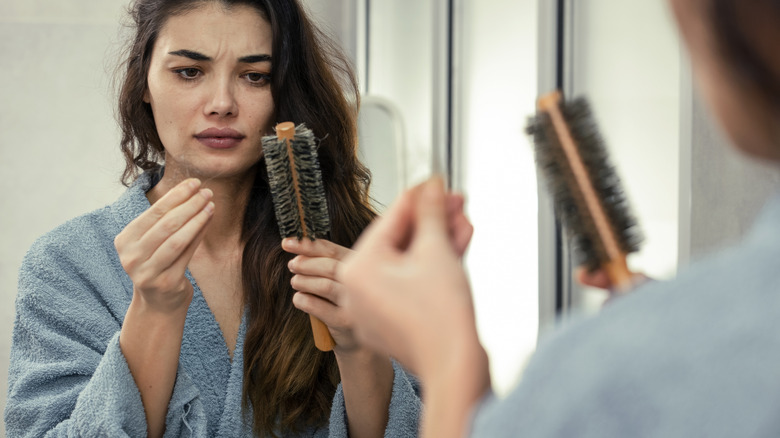
Although headlines and social media users buzz about how Ozempic causes hair loss, it isn't officially listed as a side effect of the medication. So what's the deal? According to founding physician at Misra Wellness Dr. Sulagna Misra, MD, BCMAS, MSCP, the GLP-1 med doesn't cause hair loss, but losing weight does. "When the body loses weight quickly, whether from a GLP-1 medication, bariatric surgery, or a crash diet, it can interpret that rapid change as a threat," she tells Glam exclusively. "The body redirects its energy toward keeping vital organs running and deprioritizes things it considers less essential, like growing hair." So, basically, if you think of your body as a car with a limited amount of fuel, you'd drive to the priority places you needed to go and skip the less important ones.
Dr. Misra adds that a combination of things usually contributes to hair loss at once, not just the medication. For example, emotional stress, absorption problems, hormonal changes, poor nutrition, genetics, medical issues, and even how you wear your hair can all result in or worsen hair loss. "A perimenopausal woman on a GLP-1 medication who is also stressed about current events, sleeping poorly, bleeding heavily, not eating enough protein, and taking zinc without copper — she has five or six different reasons her hair might be thinning, and the medication may only be one small piece of that puzzle," Dr. Misra explains.
Work with an expert to get your body in balance

If you're losing weight from taking a GLP-1 medication like Ozempic, is there a single fool-proof way to stop hair loss in its tracks? No, according to Dr. Sulagna Misra. "But there is a lot that can be done to reduce the risk and severity," she shares exclusively with Glam, noting that hormonal factors, such perimenopause, should be taken into account before you make a plan. One of her top tips is to work with a doctor or dietician, rather than guessing what you may or may not need in terms of nutrition. "Get a full nutritional workup before or early in treatment," she advises. "Check micronutrients like iron, ferritin, zinc, copper, vitamin D, B12, and thyroid function. Correct what is off." Also, consider these things you should know before you start taking vitamins. If you're already taking supplements, make sure they're balanced. "Do not take random handfuls of vitamins without knowing what your body actually needs," Dr. Misra stresses.
She adds that protein intake is especially important for women taking GLP-1s, as is the order in which you consume it: "Eat protein-rich foods first at every meal." And finally, establish healthy eating habits if you haven't already. "Work with your doctor or a dietitian to make sure you are eating nutrient-dense foods, not just eating less." Because yes, your diet really can affect your hair health.
Practical advice for handling weight-loss related hair loss
If you're trying to handle and treat female hair loss after experiencing weight loss from Ozempic or other GLP-1 medications, there are a few external measures that expert Dr. Sulagna Misra advises as well as the internal ones mentioned above. "Avoid very tight hairstyles that pull on the scalp," she tells Glam exclusively. And that doesn't just mean in the daytime: "Sleep with your hair loose," she says. Wearing it in a tight hairstyle might be one of the beauty mistakes you've been making while you sleep, with — thankfully — a super-easy fix.
And finally, Dr. Misra says, "Be patient. If hair shedding does happen from weight loss, it is almost always temporary. The hair follicle is not damaged. Once your weight stabilizes and your nutrition is optimized, hair typically grows back, and can even come back fuller and healthier than before."