

Queen Elizabeth's Personal Feelings About Clothing Fittings Made It Difficult To Dress Her
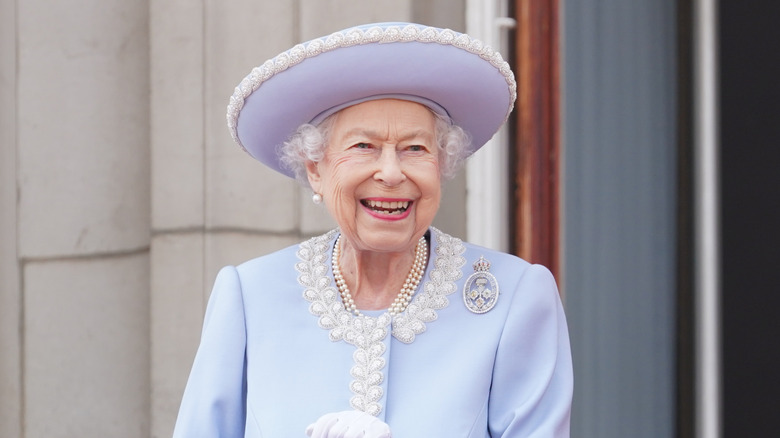
For a stylist, designer, or personal dresser, having a client like the British monarch would probably be a dream come true. While British designer Stewart Parvin was over the moon when he was approached to make clothes for the late Queen Elizabeth II, the ongoing assignment wasn't without its challenges. In addition to the plethora of royal etiquette rules that needed to be upkept, he also ran into a major design hurdle. "I told them that I needed to have measurements, but you can't measure the Queen," he revealed to The Telegraph in April 2026.
Having a client who doesn't like to be measured may sound like a deal-breaker, but Parvin improvised by simply measuring against her existing pieces. "They sent me some garments that I then based my calicoes upon," he explained. The designer noted that the queen was understandably emotionally invested in her wardrobe, perhaps more than her nonchalant public demeanor let on. Born into royalty and ascending to the throne at the tender age of 25, she was used to the best of the best (it's no wonder Clarins was among Queen Elizabeth's favorite beauty brands). The pressure was on Parvin to not only come up with the right measurements, but to wow her with his designs.
"I would do 20 or 30 sketches," he recalled in the interview. "I'd have found all these different fabrics. I'd show options for plain fabrics, prints, tweeds, you'd have all these different options and combinations." He confirmed that out of the sketches he put forward, the monarch would often lean towards surprisingly bold styles rather than the safer choices. "It's only my opinion," he went on, "but I thought she was very interested in clothes on different levels, because one, it is how she's perceived, two, they're an intimate thing."
Queen Elizabeth II was a complicated client to dress
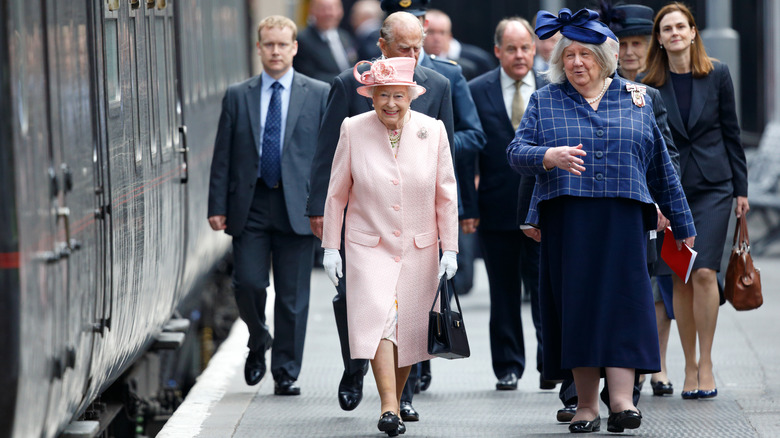
It wasn't just the measurement hurdle that Stewart Parvin faced when designing for Queen Elizabeth II. There were plenty of other considerations that needed to be factored in besides whether or not the outfit fit properly. It was particularly important for Parvin to ensure that his clothes not only looked good in real life but also photographed well. "We would look at the garments in daylight and in electric light," he told The Telegraph. "It's really important how they photograph in different lights."
The next element to consider was the practicality of each garment. "You also have to make clothes in which the Queen could get out of a carriage or get out of a car without any mishaps," he shared. "The clothes have to flow in a way that they look perfect all the time."
While her distaste for being measured was a personal preference rather than a royal rule, there were sartorial guidelines that needed to be followed when putting together the queen's looks. The fact that Queen Elizabeth wore the same pale-pink nail polish for 30 years or that she should always be in stockings didn't come under Parvin's domain, but he did have to take into account how she loved bright colors. Other than events where muted tones and blacks were required, like funerals and somber memorial ceremonies, the queen needed to stand out for the crowds that inevitably flocked to see her. That's why Queen Elizabeth wore monochromatic outfits so often. Given that she was the head of the firm, she likely had the power to dismantle any of these dressing rules if she wanted to. But if there's one thing we know about the queen, she loved her traditions, both within her wardrobe and beyond.